ACSOS In Practice
ACSOS in Practice brings together perspectives from industry and applied research to discuss how autonomic and self-organising systems move from concepts and prototypes into real-world use.
The session features Francesco Collini, Founder and CEO of FlashStart, Melanie Schranz, Senior Researcher at Lakeside Labs GmbH, and Ravi Teja Reddy Mandala, Senior Site Reliability Engineer at Oracle. Drawing on their experience in cybersecurity, cyber-physical systems, swarm intelligence, cloud infrastructure, distributed systems, and AI-driven reliability engineering, the panel will explore opportunities and challenges in translating research advances into scalable, dependable, and effective production systems, with particular attention to resilience, observability, operational safety, and human oversight.
Francesco Collini
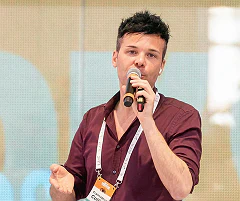
Founder and CEO @ FlashStart
Francesco Collini is the Founder and CEO of FlashStart. With over two decades of experience in digital technology and cybersecurity, he has been driven by a clear conviction: Internet protection must be advanced and effective, yet simple to use and accessible to organizations of any size.
Guided by this vision, Francesco founded FlashStart and grew it into an international company specializing in DNS-based web filtering and threat protection. Today, FlashStart develops solutions powered by cloud infrastructure, artificial intelligence, and continuous threat analysis, protecting users across 161 countries and supporting businesses, schools, public administrations, telecom operators, and service providers worldwide.
As CEO, Francesco drives the company’s growth and innovation, working daily to stay ahead of evolving cyber threats and to make cybersecurity faster, more reliable, and effortless to manage.
Melanie Schranz
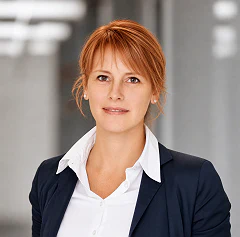
Team Lead and Senior Researcher @ Lakeside Labs; Founder @ Swarmtelect
Dr. Dipl.-Ing. Melanie Schranz is Team Lead and Senior Researcher at Lakeside Labs in Klagenfurt, Austria, and the founder of Swarmtelect. She leads national and international research initiatives focused on engineering swarm intelligence for cyber-physical systems. Her work explores how simple, local interactions can generate robust, scalable, and adaptive collective behavior. Drawing inspiration from natural systems, she develops swarm-based approaches for applications ranging from drone-assisted search and rescue and autonomous vehicles to smart production scheduling. By bridging algorithmic foundations with real-world implementation, Melanie aims to make interconnected autonomous systems more intelligent, resilient, and capable of operating in dynamic environments. She holds a PhD in Technical Sciences from the University of Klagenfurt and has extensive experience in research management, innovation, and securing funding at the regional, national, and European levels.
Ravi Teja Reddy Mandala
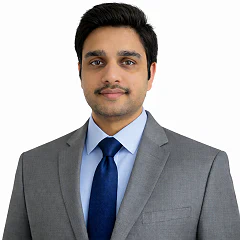
Senior Site Reliability Engineer @ Oracle
Ravi Teja Reddy Mandala is a Senior Site Reliability Engineer at Oracle with more than 10 years of experience in cloud infrastructure, distributed systems, DevOps, and AI-driven reliability engineering.
His work focuses on building scalable and resilient production systems while improving observability, operational safety, and human oversight. His experience spans the design and operation of complex cloud environments, with particular attention to reliability, automation, and the safe deployment of intelligent systems in production.
Ravi is also an IEEE Senior Member, researcher, speaker, peer reviewer, and university advisory board member.
Wed 9 SepDisplayed time zone: Amsterdam, Berlin, Bern, Rome, Stockholm, Vienna change
09:00 - 10:00 | Keynote: Bridging Centralized and Decentralized Control in Robot Swarms through Self-Organizing HierarchiesMain Track at Aula Magna "Carmen Tura" Speaker: Marco Dorigo (Université Libre de Bruxelles) In this talk, I present the Self-Organizing Nervous System for Robot Swarms (SoNS), a middleware framework that enables robots to dynamically form adaptive hierarchical structures. SoNS bridges centralized and decentralized paradigms by supporting functionally centralized coordination of sensing, actuation, and decision-making, while preserving the scalability, flexibility, and fault tolerance of self-organizing systems. | ||
13:00 - 14:00 | |||
16:30 - 17:30 | When Systems Decide: Can We Trust Autonomy in Production?ACSOS In Practice at Aula Magna "Carmen Tura" As technical systems increasingly observe, decide, adapt, and act with minimal human oversight, the question of trust becomes critical. This panel brings together practitioners to explore what autonomy truly means in real-world production environments, going beyond conceptual models. Through concrete system examples, panelists will examine the gap between theory and practice, discuss where to draw the line between automation and human control, and share evidence-based approaches for verifying correct behavior. They will also candidly address failure modes, uncomfortable trade-offs, and hard-earned lessons that the ACSOS research community should not overlook. Join us for an honest conversation about what makes autonomous systems worthy of our trust—and what keeps practitioners up at night. | ||
18:00 - 19:00 | |||
19:00 - 23:00 | |||
19:00 - 20:00 | |||